


In the Garden Now...
- Lisa

- Aug 6, 2025
- 3 min read
The rain finally came for us in Columbia, SC! We went through 100 degree weather with high humidity that seemed never ending, but as always, it did end. And now we have had a week of rain. In light of that here are some reminders when the rain comes like it has been:
Remember if you are growing in pots or containers to make sure that they have good drainage holes. Most plants, sitting in water sodden soil can cause root rot and other disease.
small seedlings outside in hard rains can drown easily. Move them, if in pots, to a place with some cover.
If you have plants planted in rows in the ground, make sure that there are some lower row areas for water to drain out past your rows.
Keeping a good level of composted organic material in your soil assists greatly with soil drainage and health.
After a heavy rain make sure the water is not puddling and staying in one place.
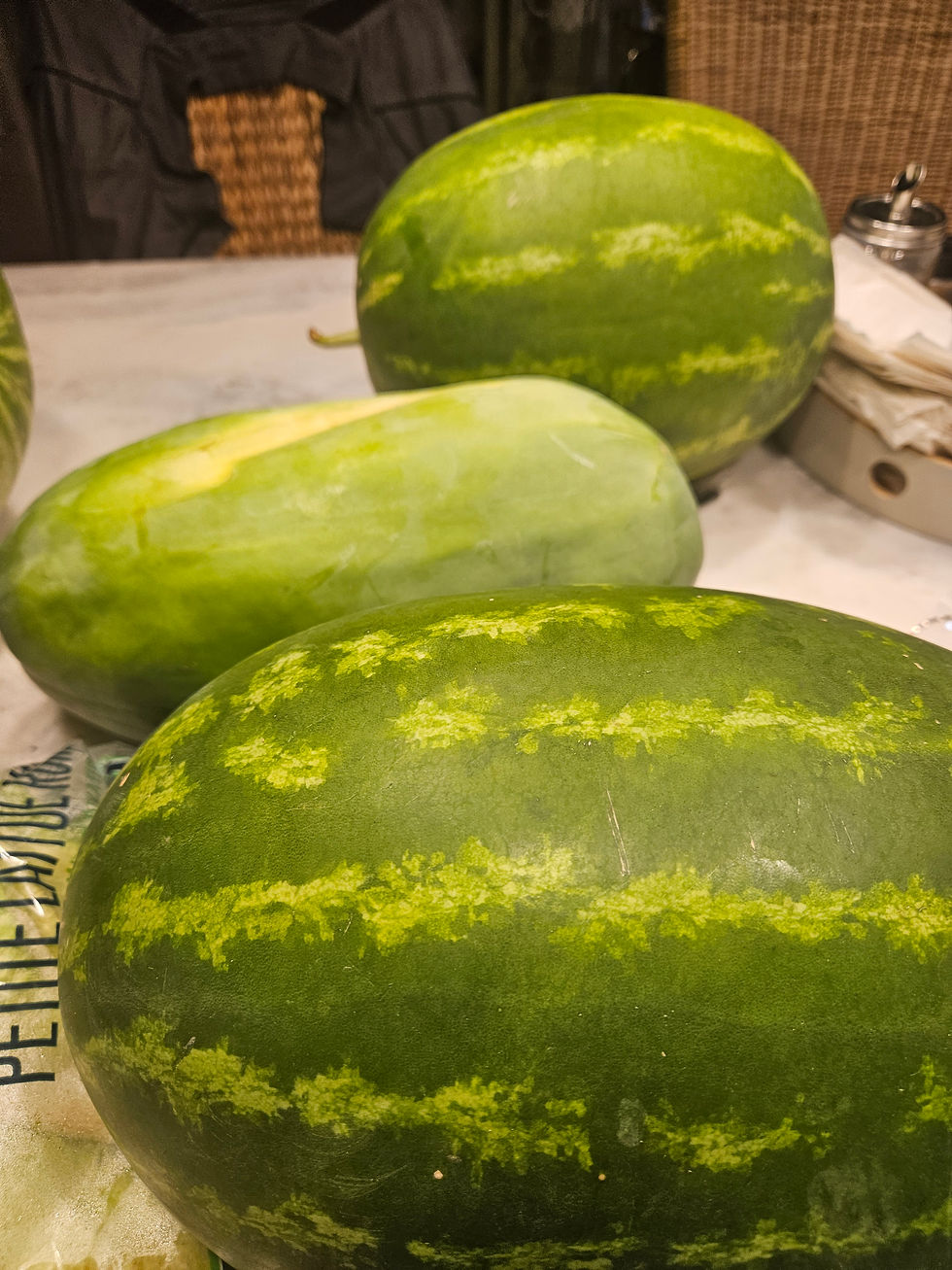


This has been a great watermelon season! The key is knowing when watermelons and other melons are ripe so that they do not crack open and rot being on the bush too long.
Make sure to check your planting timing for maturation date. Remember this is on most seed packets. If you purchased a seedling
From Seed: Most watermelon varieties take 70–90 days from seed to maturity (some larger varieties may take up to 100 days).
From a 4-week Seedling: Subtract about 3–4 weeks (the seedling stage), so expect 50–75 days from transplanting to harvest, depending on the variety.
Note: smaller “icebox” melons mature faster, while large oblong melons take longer
How do you know if your watermelon is ripe?
Remember that different species of watermelons look different on the inside when ripe. Not all watermelon are bright, deep pink. Some are light pink, yellow or orange when they are ripe.
Signs of a Ripened Watermelon
Tendril Test – The curly tendril nearest the fruit stem turns brown and dry. (A green tendril usually means it’s not ready yet.)
Ground Spot Color – The underside (where it sits on the ground) changes from white to a creamy yellow.
Skin Texture – The rind becomes dull and less shiny, and it resists scratching with a fingernail.
Knock Test – When tapped, a ripe melon gives a deep, hollow sound, unlike the higher-pitched sound of an unripe one.
Weight – A ripe melon feels heavy for its size because of its high water content.
What Next?
Summer is still rolling strong! In the next month or so temperatures will start decreasing but we have plenty of time to still enjoy those summer vegetables and herbs. This is also prime time to start seeds for some fall plants. I have started seeds in my greenhouse. It is always hard for me to hold off. I always get excited about planting new seeds and new growing seasons! Remember, the end of warm weather does not mean the end of growing healthy foods for us in the southeast!
Your seeds will be mailed next week to support your fall planting.


Comments